Hospital · Non-medical
Someone with your patient in the ward, so the family can go home.

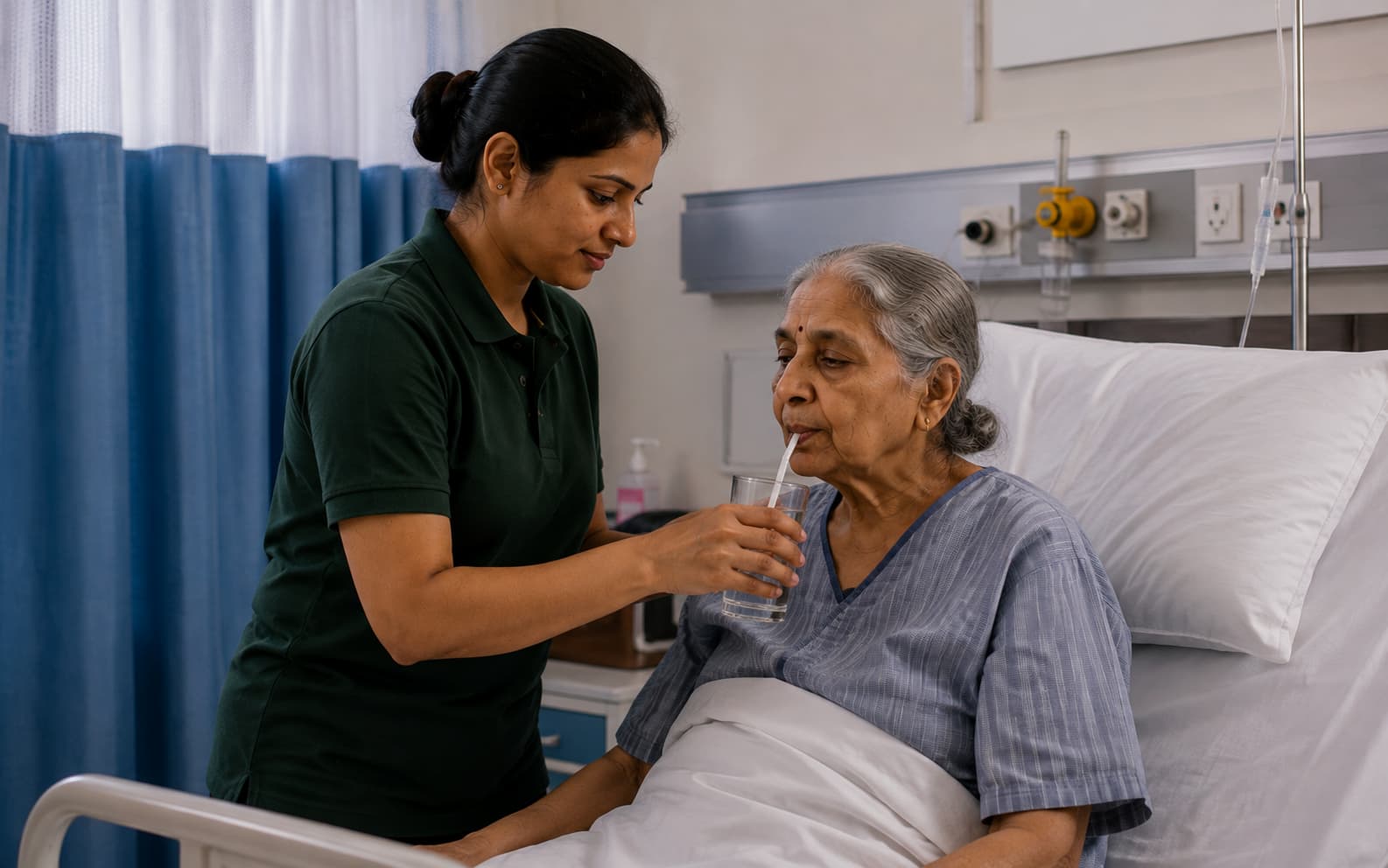
Hospitals expect a bystander. Usually that means a family member sleeping upright in a chair for a week. An attendant, also called an attender or patient attendant, takes the shift instead: feeding, hygiene, mobility, and being there in between the nurse’s rounds.
Tell us which hospital and ward on WhatsApp, location and shift pattern decide who we can send.
Which shift do you need?
Opens WhatsApp with your details filled in. We usually reply within 15 minutes.
Plainly
A bystander is the person who stays with an admitted patient and handles everything the nursing staff does not: feeding, bedpan and hygiene, turning in bed, fetching medicines from the pharmacy, and calling a nurse when something changes. Most Indian hospitals expect every admission to have one.
Traditionally that is a family member, which is why wards are full of relatives sleeping in chairs. A hired attendant does the same job on a booked shift, so the family can go home, sleep, and come back able to think.
The words change by region and by hospital. Bystander, attender, patient attendant, ward attendant and hospital attendant all describe the same role. What matters is the line that does not move: an attendant is not clinical staff. Injections, IV lines, dressings and medication are the hospital’s nurses, always.
If your hospital has asked you to arrange a bystander and you are not sure what they expect, tell us which hospital and which ward on WhatsApp. We deal with this daily and will tell you straight.
In Bangalore
We send attendants to wards and ICUs across the city, including admissions at Manipal, Apollo, Fortis, Narayana Health, St John’s, Aster and Sakra, and at the smaller nursing homes families more often end up in. We are not affiliated with any hospital: we staff the bedside, the hospital runs the treatment.
Two things are worth knowing before you book. Most hospitals issue an attendant pass and allow one person at a time, so a 24-hour arrangement usually means two attendants in twelve-hour shifts rather than one person staying awake for a day. And ICUs restrict who may be present and when, so an ICU booking is often a day shift with the attendant waiting outside visiting hours.
Language is part of the job here, because the attendant relays what the nurses say to a family that may not share their language. Between them our Bangalore attendants speak Kannada, Hindi, English, Tamil, Telugu and Malayalam.
The Process
Tell us the hospital and ward
Location and shift pattern decide who we can send.
Shift confirmed
Day, night or full day, for as many days as the admission runs.
Attendant reports to the ward
Introduced to the nursing staff and the family on the first shift.
Continues to discharge
And if you need care at home afterwards, they’ve already met your patient.
Good to know
The person who stays with an admitted patient and handles what the nursing staff does not: feeding, bedpan and hygiene, turning in bed, fetching medicines, and calling a nurse when something changes. Indian hospitals expect every admission to have one, and it is usually a family member unless you hire an attendant.
A nurse is clinical staff and handles injections, IV lines, dressings and medication. A bystander or attendant handles everything around that: feeding, hygiene, mobility and presence. We place attendants for the bedside, and separately place ANM and GNM nurses for clinical care at home.
Often yes, sometimes not, and we will tell you which within a few minutes rather than leave you waiting. Night shifts in a ward are the hardest to fill at short notice. Tell us the hospital, the ward and the shift you need on WhatsApp.
Any hospital in the city, from the large ones such as Manipal, Apollo, Fortis, Narayana Health and St John’s to smaller nursing homes. We are not affiliated with any of them; we staff the bedside while the hospital runs the treatment.
No. Inside a hospital all clinical care belongs to the hospital’s nursing staff. The attendant handles everything else.
Most Bangalore hospitals allow one bystander. Check with the ward and tell us about any ID requirements.
Often yes, and it’s worth asking, they already know your patient and the routine.
Everyone we place goes through document verification, reference checks and police verification before they are placed with you. For nurses we additionally verify the qualification against their nursing registration.
It depends on the hours, the level of care, and whether the role needs a nurse or a caretaker. Tell us what you need on WhatsApp and we’ll share exact pricing: all-inclusive, with no hidden costs.
Tell us and we’ll replace them at no extra cost. It usually happens in the first week if it happens at all, and it isn’t a problem: getting the match right matters more than getting it right first time.
WhatsApp is fastest and we reply within minutes. You can also call the same number: +91 96203 84645.
Related
Care needs rarely fit neatly into a list. Tell us the situation on WhatsApp and we’ll tell you honestly whether we can help.
Message us on WhatsAppTell us the situation. We’ll help you work out what you actually need.
Message us on WhatsAppAverage response time: under 15 minutes · Bangalore, India